
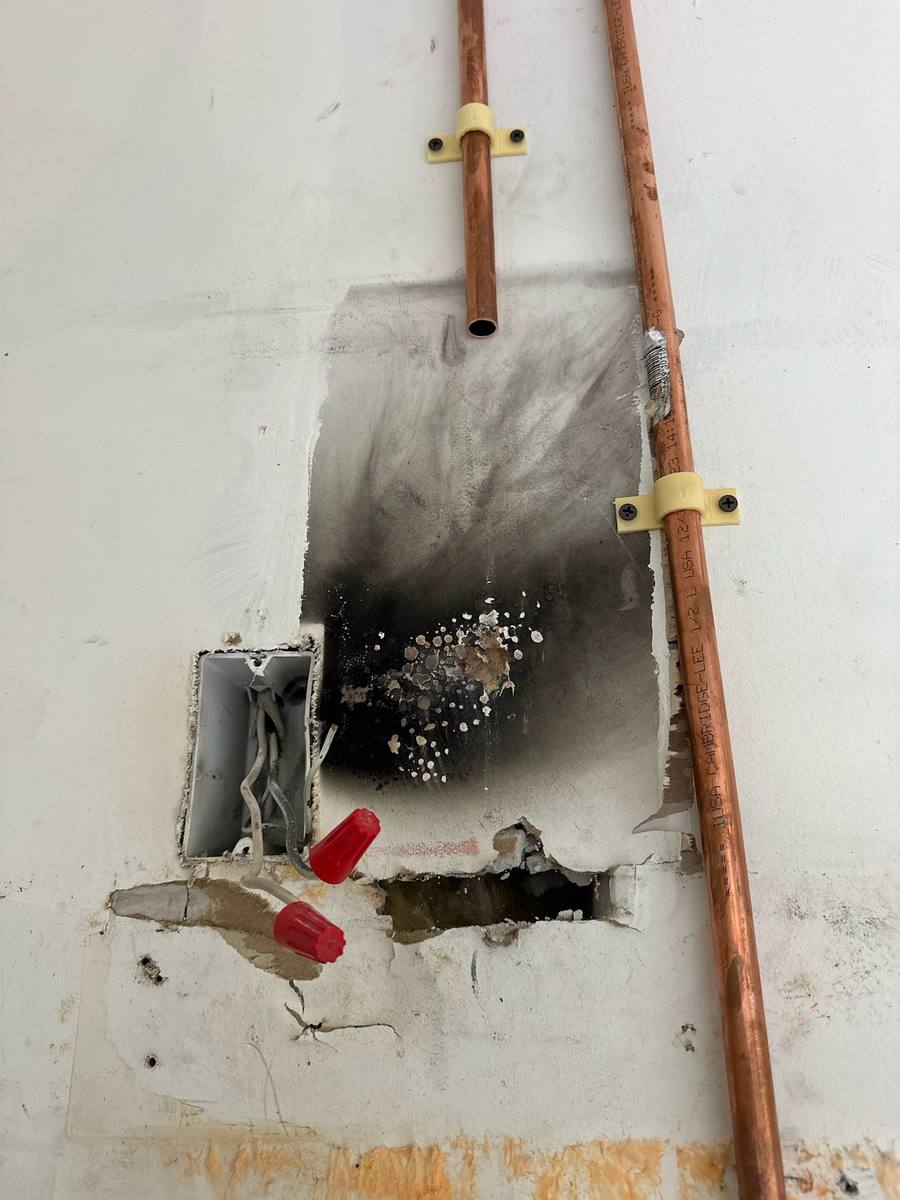
A hidden water leak rarely announces itself. The first clues are usually a water bill that jumps for no reason, a warm spot on the floor, the sound of running water when everything is off, or mildew and stains creeping across a wall or ceiling. Left alone, even a small leak can rot framing, ruin flooring, and feed mold. We use proven leak-detection methods to find the exact source — instead of guessing and cutting open walls — then make a clean, lasting repair.
When You Need Water Leak Detection & Repairs
- Water bill suddenly higher with no change in usage
- Warm or damp spots on the floor (possible slab leak)
- Sound of running water when all fixtures are off
- Stains, bubbling paint, or mildew on walls or ceilings
- Low water pressure with no obvious cause
- Soggy areas in the yard over the water line
What You Can Safely Check First
You can do a simple leak test: turn off every water fixture in the home, then check your water meter. If the meter is still moving, water is escaping somewhere. You can also check toilets by adding a few drops of food coloring to the tank — if color shows up in the bowl without flushing, the flapper is leaking. For anything beyond that — slab, wall, or underground leaks — you'll want professional detection equipment so the leak is found without unnecessary demolition.
When to Call a Professional
- Any unexplained jump in your water bill
- Suspected slab leak (warm floors, running-water sound)
- Wet drywall, ceilings, or persistent mildew
- A wet patch in the yard over your service line
- You've found moisture but can't locate the source
How Blue Wave Handles It
- 1Confirm there's a leak and isolate the affected line
- 2Use electronic and acoustic detection to pinpoint the exact location
- 3Show you the source and explain your repair options up front
- 4Make the repair with minimal access — no needless demolition
- 5Pressure-test the line to confirm the leak is gone
- 6Clean up and verify normal pressure throughout the home
Common Causes
- Slab leaks from corroded or shifting under-slab pipes
- Aging or corroded supply lines failing at joints
- High water pressure stressing fittings over time
- Coastal humidity and salt air accelerating pipe corrosion
- Ground movement or root intrusion damaging underground lines
Local Plumbing Factors in Palm City & Martin County
Palm City and Treasure Coast homes face hard water and corrosive coastal air that wear pipes from the inside and outside. Many homes are also built on concrete slabs, where a leak can hide for weeks before surfacing as a warm spot or high bill. Fast, accurate detection saves Martin County homeowners from expensive water damage and mold remediation.
Cost Factors in Palm City
Leak detection and repair cost depends on where the leak is, how accessible it is, and the type of line. Detection is far cheaper than the water damage a hidden leak causes — and pinpoint location means a smaller, less invasive repair. We provide clear pricing before any work. Call (772) 214-4319.